Hallgrímskirkja Church towers over Reykjavik, a vibrant city known for Nordic cuisine, unique museums, and lively shopping. After safety briefings, we set sail toward totality in East Greenland.

 Quick Email
 888 308 4904
Quick Email
888 308 4904
888 308 4904
Quick Email
888 308 4904

Wild. Rugged. Remote. Pristine. Words which describe, but fail to capture the majesty of one of the wildest regions on planet Earth.
The flickering aurora borealis, vast glaciers, precipitous mountains, and charismatic Arctic wildlife are just some of the spectacles we hope to see on the wild shores of Earth’s largest island. Experience Tunumiit culture and incredible history in Ammassalik region, meet the locals in Greenland’s most isolated community in Ittoqqortoormiit, and experience the unrivalled majesty of the Northeast Greenland National Park – the largest in the world. Blending ancient culture, mind-boggling natural beauty, and the chance to see some of the Arctic’s most charismatic wildlife, this voyage showcases the best of the Arctic’s largest wilderness.
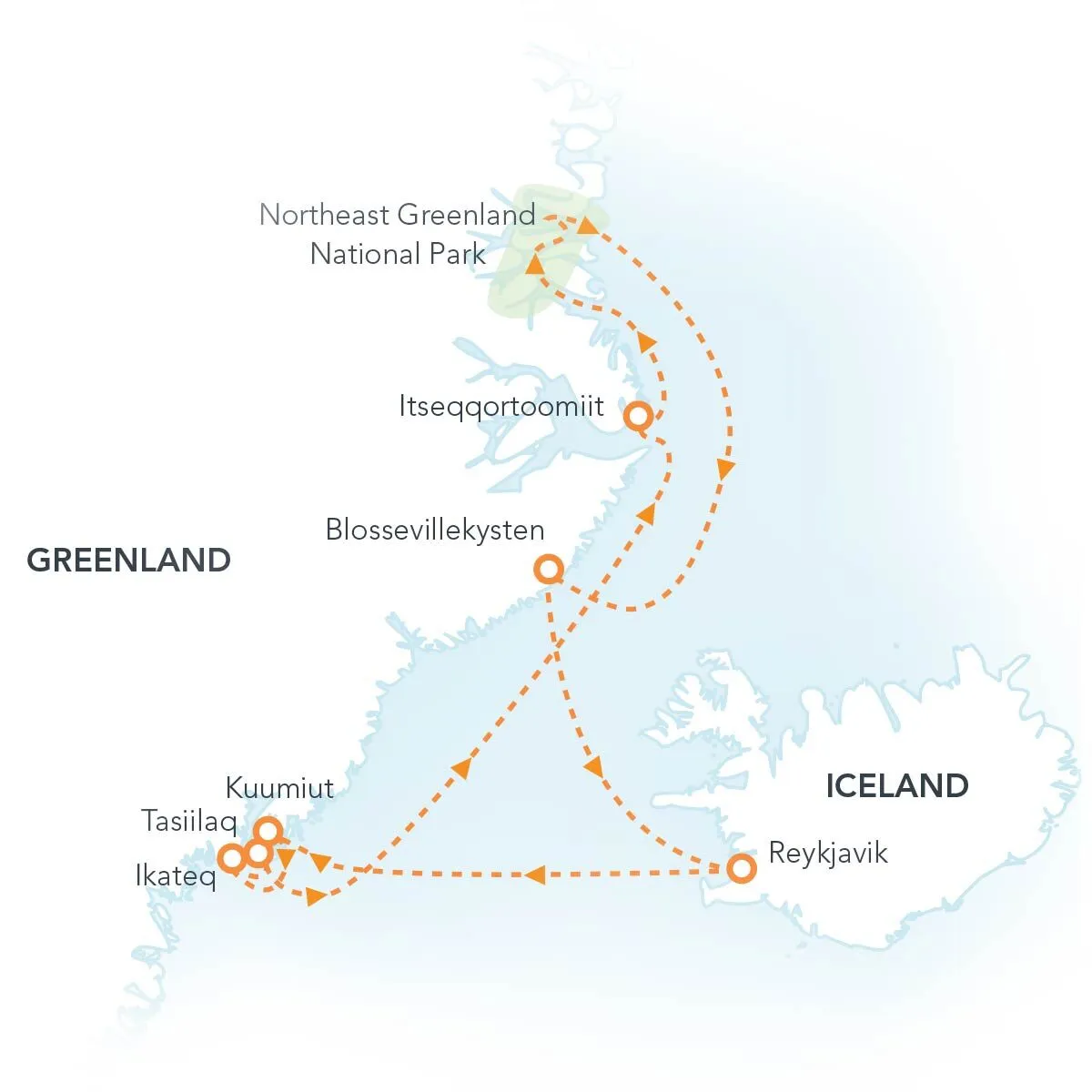
Day 1 - All Aboard in Reykjavik!
Hallgrímskirkja Church towers over Reykjavik, a vibrant city known for Nordic cuisine, unique museums, and lively shopping. After safety briefings, we set sail toward totality in East Greenland.
Day 2 - At Sea, Crossing the Denmark Strait
The Denmark Strait, a narrow passage between Iceland and Greenland, teems with rich marine life. Our onboard experts guide guests in safely viewing the eclipse. Nearing Greenland, the team shares insights on ecology, geology, and wildlife, preparing guests for Zodiac operations and polar bear safety.
Day 3 - Kuummiut and Ikateq, East Greenland
The day begins in Kuummiut, a picturesque and prosperous village nestled in the serene Ammassalik Fjord. Roughly meaning “People who Live by the River,” Kuummiut thrives on its rich fishing grounds and is home to East Greenland’s only fish factory, drawing fishermen from across the local area. With no road access, the sea serves as its highway, and the village offers a glimpse into traditional East Greenlandic life, marked by sled dogs, motorboats, and the quiet rhythm of Inuit life. It’s a peaceful setting to watch drifting icebergs and meet the locals to learn about their beautiful culture.
In the afternoon, the journey continues eastward to Ikateq, a fjord steeped in wartime history. During World War II, the U.S. military built a large airbase here—Bluie 2 East—as part of a transatlantic air route. Despite hazardous terrain and harsh weather, a full airfield, port, hangars, and supplies were established. When the base was abandoned in 1947, nearly everything was left behind. Decades of political debate between Nuuk, Copenhagen and Washington followed over the site’s environmental impact, leading to a cleanup of hazardous materials. Today, Ikateq stands as a haunting and well-preserved relic of the wartime era, set amid Greenland’s breathtaking natural landscape.
Day 4 - Tasiilaq, East Greenland
Tasiilaq is East Greenland’s largest settlement, sitting on rugged Ammassalik Island. Isolated from European contact until its founding as a trading post in 1894, it preserves the unique culture of the Tunumiit people. Once home to Greenland’s last shamans, Tasiilaq is the origin of the tupilak, a feared magical creature – now a celebrated art form. Visitors can meet sled dogs (with owners’ permission), experience drum dancing, hike tundra meadows, and visit the famous Stunk Artist’s Workshop.
Day 5 - At Sea, En Route to Ittoqqortoormiit
Keep your binoculars to hand as we sail along this remote rugged coastline; cold currents drifting down from the Arctic Ocean mix with the last gasp of the Gulf Stream along the East Greenlandic coast, creating vast biological productivity. As we sail these rich seas, guests can enjoy fascinating lectures, indulgent spa treatments, or simply relax and watch seabirds and other wildlife from the ship’s hot tubs.
Day 6 - Ittoqqortoormiit
The only settlement in this region, Ittoqqortoormiit is among the most remote communities on Earth. While the establishment of the town by Danish authorities in 1925 was challenging, residents continue a subsistence hunting lifestyle, essential when supply ships arrive only once or twice per year. Ittoqqortoormiit is a town with a strong sense of community and traditional culture, hosting an excellent museum, a beautiful traditional church, and locals often welcome visitors wearing colourful traditional costumes. Perfectly positioned at the fringes of the Northeast Greenland National Park, Ittoqqortoormiit represents the end of human civilization, and the start of thousands of miles of pristine Arctic wilderness.
Day 7/9 - Northeast Greenland National Park
As the ship sails past the rugged Liverpool Land peninsula, we enter the vast Northeast Greenland National Park — the world’s largest protected land area, spanning nearly a million square kilometers and encompassing the northernmost land on Earth. Uninhabited today, the region was once home to nomadic Inuit hunters who thrived off its natural abundance until the mid-19th century.
Due to the extreme remoteness and unpredictable Arctic conditions, the itinerary within the park is flexible and dictated by weather, wind, sea, and ice. The Captain and Expedition Leader determine daily plans, which are announced the evening before. Potential highlights include Ella Island’s dramatic 1300-meter cliffs at Bastionen, the historically significant Maria Island — site of a German WWII camp — and Blomsterbugten on Ymer Island, where visitors may enjoy views of the striking Teufelsschloss mountain and its vivid geological layers. Other possible destinations include the calving Waltershausen Glacier, the magnificent Moskusokse Fjord, and the wildlife hotspots of Jameson Land.
Throughout our time in the Park, your Expedition Team provides engaging lectures, friendly discussions, and onshore insights, while always scanning the landscape for Arctic wildlife. In this remote and pristine wilderness, guests are promised a journey rich in natural beauty, discovery, and adventure.
Day 10 - Blosseville Coast
The Ocean Albatros will sail south along Greenland’s Blosseville Coast, a rugged landscape shaped by volcanic activity around 50 million years ago. First surveyed by explorer Ejnar Mikkelsen, this area has long been navigated by the Inuit. If conditions allow, we may land in this now-uninhabited region of breathtaking beauty.
Day 11 - At Sea, En Route to Reykjavik, Iceland
During our time at sea approaching Reykjavik, relax and reflect on your thrilling Arctic adventure. Attend final lectures from the Expedition Team, relive your adventure at the voyage slideshow, and celebrate your voyage with new friends at the Captain’s Farewell Cocktail Party.
Day 12 - Reykjavík, Iceland
As the Icelandic capital comes into view on the horizon, strange objects appear; trees larger than ankle height, glassy skyscrapers and streets full of cars, busses and people... Such a bustling capital may feel strange after the remote wilderness of Greenland!
After a hearty breakfast, it is time to bid a fond farewell to the Crew and Expedition Team of Ocean Albatros, and descend the gangway back to dry land with memories of the voyage of a lifetime.
Please consider that our voyages are expeditionary in nature. This means, that there are no concrete itineraries, your captain and expedition leader will utilise their vast experience to chart the best course for your expedition depending on the climatic and environmental conditions. Mentioned highlights and wildlife cannot be guaranteed.
This program is designed for those guests who just want a taste of the Antarctic kayaking experience. Each participant kayaks once per voyage in a group of 14 with a dedicated guide team and safety Zodiac. Total number of available kayaking spots on each departure will vary by itinerary length and weather, but we aim to get groups on the water at every opportunity.


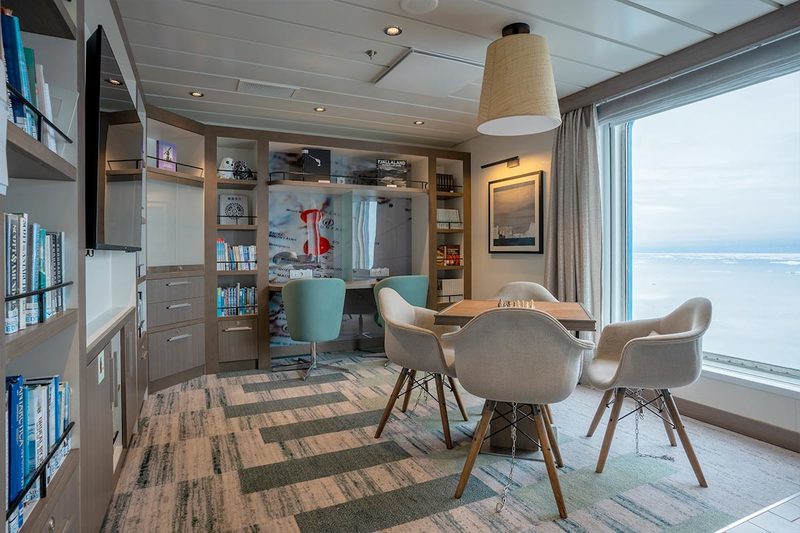
The Ocean Albatros is a cutting-edge expedition ship built for Antarctic exploration. Its patented X-BOW design ensures exceptional stability and comfort, complemented by onboard amenities designed for maximum Antarctic immersion. Staterooms offer expansive views, many with private balconies, while multiple observation decks and hydraulic platforms provide unique vantage points for photography. Powered by dual diesel-electro engines, the Albatros reduces its carbon footprint by 50% compared to traditional ships, supported by rigorous sustainability practices under the Green Initiative Program. This combination of innovation and environmental stewardship promises an unparalleled Antarctic experience.
| Luxury star rating: | |
| Guests #: | 192 |
| Crew #: | 104 |
| Ice Class: | 6 |
| Speed: | 15 |
| Refurbished: |
| Year built: | |
| Length: | 104m |
| Width: | 18 |
| Draft: | |
| Tonnage: | |
| Registry: | |
| Elec Outlets: |




We understand that the trip of a lifetime takes planning, so we make the financial commitments easy to manage.


